
2026-2027 Fellows

Nataliya Dixon
Nataliya is a Biomedical Engineering PhD student in the Blatchley lab. Her research includes tissue engineering and organ-on-chip systems with a focus on intestinal organoids, stem cell behavior, and microphysiological systems, with an emphasis on how metabolism, mechanobiology, and microenvironmental cues influence cell fate and tissue organization. Her work involves developing and optimizing microfluidic vascularized models and engineered extracellular matrix systems to better understand intestinal biology and disease processes.
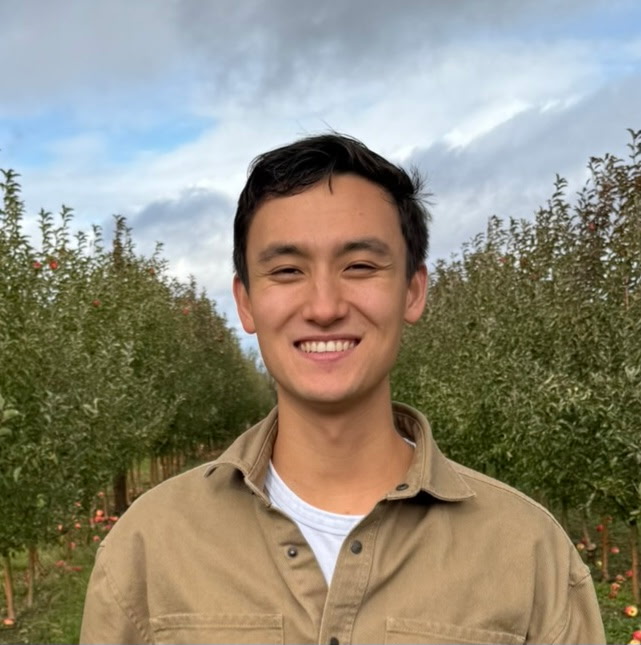
Carter Matties
Carter is a Physics PhD student in the Santangelo Group. Carter is interested in utilizing methods from differential geometry and topology to characterize the stability of soft materials. He is currently investigating the geometric conditions for the existence of soft zero modes in thin sheets.

Diana Palade
Diana is a Biomedical Engineering PhD student in the Joseph lab. The Joseph lab engineers nanoparticles and bacterial extracellular vesicles for targeted drug delivery to advance maternal and fetal health. Diana’s work involves engineering extracellular vesicles from Lactobacillus crispatus to improve the function and composition of the vaginal microbiome and reduce the recurrence of bacterial vaginosis

Nathan Tran
Nathan is a Biology PhD student in the Meyer Lab. His research uses the Arabidopsis intrinsically disordered protein (IDP), SUF4, as a model to understand how disordered proteins carry out diverse roles across different physiological contexts. In particular, he is interested in how IDP phase separation may act as a biophysical mechanism to regulate and coordinate different activities. By uncovering these fundamental principles, his research can be used to engineer next generation crops that are more resilient to climate change as well as be applied to other IDPs involved in disease pathways. Though originally trained in genetics, his work now integrates biochemistry and biophysics to better understand the mechanisms of IDP function.
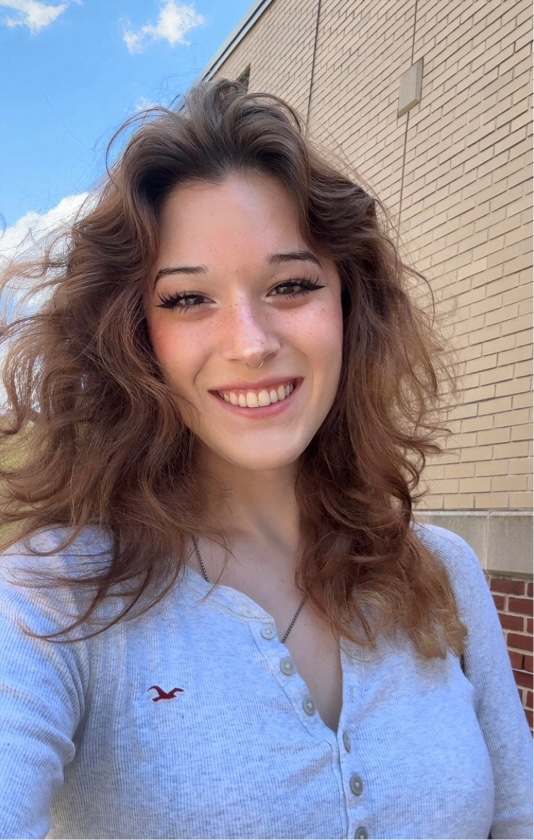
Eden Vallari
Eden is a Chemistry PhD student jointly advised by Dr. Carlos Castañeda and Dr. Shahar Sukenik. Her project focuses on intrinsically disordered proteins (IDPs), which are proteins that lack the fixed three-dimensional structures found in well-folded proteins, likeα-helices and β-strands. Rather than folding into a defined shape, disordered regions exist as a constantly changing ensemble of conformations; it can be thought of as a cooked spaghetti noodle. Eden studies how small missense mutations within the amino acid sequence of these disordered regions can alter the conformational ensemble and, in turn, affect protein function. These mutations are clinical variants identified in patients, directly connecting her work to real disease cases. To capture these structural changes, she uses Nuclear Magnetic Resonance (NMR) spectroscopy, which allows her to examine protein behavior at an atomic level. Because the proteins she works with are each linked to a monogenic disease, her research offers a window into how these subtle sequence changes can give rise to illness.
2025-2026 Fellows
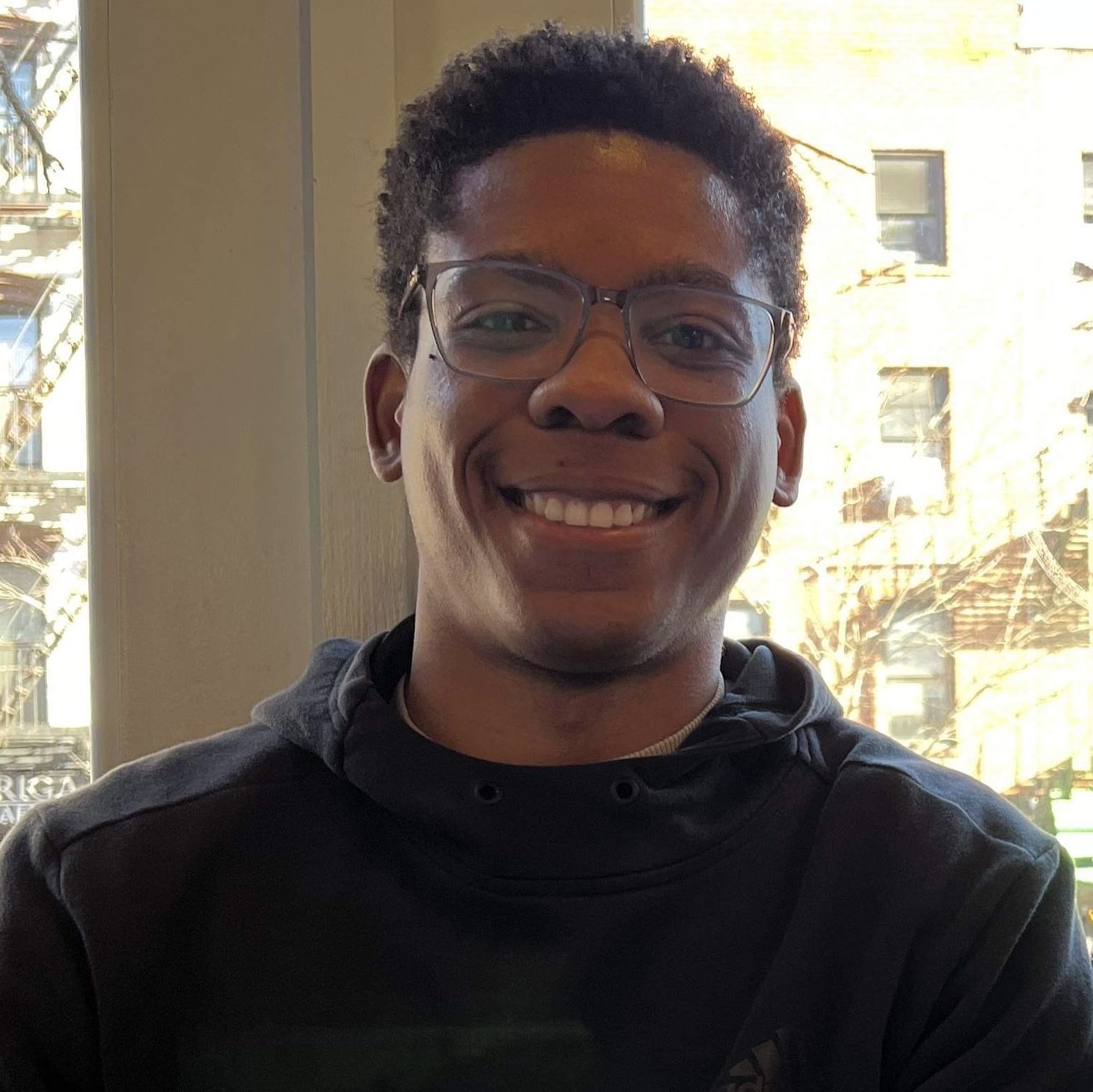
John Abili
John is a Biology PhD student in the Hougland Lab. The Hougland Lab studies post-translational modifications with a focus on prenylation and the enzyme Ghrelin O-acyl transferase (GOAT). GOAT catalyzes the acylation of the peptide hormone ghrelin with octanoyl-CoA. This reaction replaces an OH groupgound on ghrelin with an 8-carbon-containing group. GOAT and ghrelin play roles in many physiological pathways and processes, including appetite stimulation, glucose homeostasis and cardiovascular health. John’s research focuses on solubilizing GOAT and investigating its presence and activity within extracellular vesicles. Work in these areas has the potential to reveal the chemical properties responsible for GOAT’s structure and function as well as expand our understanding of how GOAT contributes to physiological processes. Click here to check out the Hougland Lab.
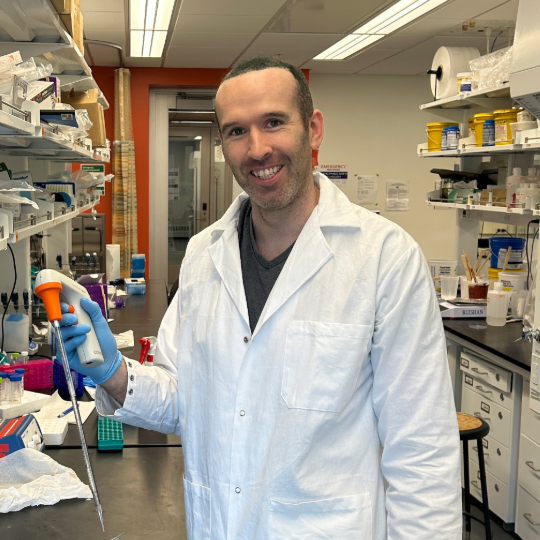
Jimmy Blauser-Wilson
Jimmy is a Biomedical Engineering PhD student in the Wu Lab. Jimmy is conducting immunological engineering research and is part of a team working to disguise therapeutically enhanced biomaterials with a person’s natural cellular components. The goal is to achieve highly specific drug delivery to alleviate certain autoimmune diseases. Click here to check out the Wu Lab.

Anton Jayakodiarachchige
Anton is a Biology PhD student in the Lucas Lab. Anton is investigating the human gut microbiome, with a particular focus on the dynamic interactions between host and microbes. His research centers on Mediterraneibacter gnavus (M. gnavus) and its striking ability to switch from commensal to pathogenic in the small intestine in a diseased state. Gaining a deeper understanding of the role of M. gnavus in disease progression is essential for uncovering its contribution to host–microbe interactions and potential therapeutic targets.

Daniel Podzunas
Daniel is a Mechanical and Aerospace PhD student in the Sun Lab. Daniel’s research interests lie in utilizing computational fluid dynamics to investigate various methods of flow control. He is currently looking at how cavities can be used to improve the performance of airfoils in post stall conditions. Click Here to check out the Sun Lab.
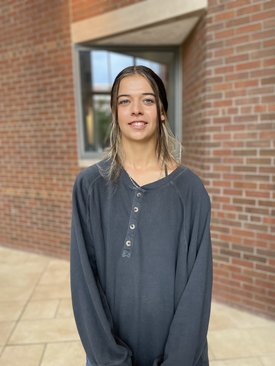
Abigail Stapf
Abigail is an inorganic chemist working primarily with metals on the periodic table. She is a member of the Mathew Maye lab. Her research focuses on the making of very small particles called quantum dots or rods, which are composed of a metal and a nonmetal. An interesting property of quantum materials is that they will be colored differently based on their size, so identical ‘recipes’ for quantum dots can yield different colors solely based on the size (how long the dot was heated for). Once Abigail makes the quantum dot/rod to the desired size/color she can then ‘functionalize’ the rod/dot by attaching a different molecule to its surface. After functionalization, there are a variety of properties that can be analyzed depending on the new molecule. Possible properties include, but are not limited to, light absorption of circularly polarized light and energy transfers between the molecule and the rod/dot. Click here to check out the Maye Lab.